THE PROGRAM
PAQUITA
GRAND PAS CLASSIQUE
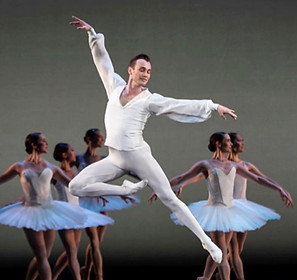
A luminous fragment of a ballet largely lost to time, the “Grand Pas Classique” from Paquita endures as one of the great celebrations of classical ballet and of women in dance.
Originally added by Marius Petipa in 1881 to the existing ballet Paquita, the work was created to showcase the brilliance of a leading ballerina and has since evolved into a structured suite of dances that remains a cornerstone of the classical repertoire.
Paquita stands apart for the way it highlights multiple women, with a principal ballerina, featured soloists, and a corps de ballet sharing the stage. This staging draws inspiration from Natalia Makarova’s 1984 revival for American Ballet Theatre.
Guest artist Zachary Guthier will perform the lead male role, partnering Mila Quijas on Friday evening and Miriam Kallmes on Saturday.

STILL
Still is an intimate duet choreographed by Robert Battle, former artistic director of Alvin Ailey American Dance Theater and current resident choreographer of the Paul Taylor Dance Company. Set to music by Felix Mendelssohn and performed by Alex Davis Clayton and Kristin Draucker of the Paul Taylor Dance Company, the work offers a quiet and focused exploration of connection through movement.
HAYDN 87
Haydn 87 is a sprightly, music driven ballet choreographed by Christin Hanna in 2016 and originally commissioned by the Lake Tahoe Music Festival. Set to Symphony No. 87 by Joseph Haydn, the work closely follows the structure and character of the score, allowing the choreography to reflect its lively musical phrasing and texture. Alex Davis Clayton joins LTDC’s own Romi Broglio in the principal roles, alongside a corps de ballet of six ballerinas performed by apprentices Nora Abrams, Lily Bonner, Miya Lefrancois, Charlotte Meyer, Riley Oh, and Emilia Spero.


VIDUITY
Viduity is a meditation on grief, created in 2007 at New Chamber Ballet in New York City and featuring Christin Hanna in the original cast. Set to the haunting piano sonata October 1, 1905 – From the Street by Leoš Janáček, the work draws from music written in response to the killing of a Czech activist, imbuing the choreography with a sense of quiet intensity and emotional depth. The title, meaning widowhood, reflects the ballet’s central theme, as movement and music intertwine in a restrained yet powerful exploration of loss. Following its premiere, The New York Times noted the work’s “aching clarity,” highlighting its ability to convey profound emotion with striking simplicity.
MEET THE GUEST ARTISTS